The Long Life of the Market Town
Market town history helps you trace how exchange shaped routes and settlement, and distinguish surviving evidence from later changes to a town’s layout.
Why can a town still feel like a centre after its market has moved or closed? Market town history offers a way to read that persistence: recurring exchange brought people together, and the routes and services built around it could remain important after trading changed.
A town’s present layout is not a direct picture of its past. A broad street may once have held stalls, but it could also reflect later rebuilding or traffic. To understand the clues, consider the market alongside the routes that led to it and the settlements around it.
Why might the old centre lack a market square?
A market was an activity, not a fixed architectural style. Trading might take place in an open space, along a street, beside a church or among adjoining plots. Buildings could change while trading continued, or trading could move while the old centre remained.
A town’s market history therefore does not require a recognisable square. Stalls may have occupied a widened stretch of the main street, or later buildings may have filled an open area. A handsome square, on its own, does not establish that a market shaped the settlement.
Look for clues in combination: a central open space, broad frontages, former market buildings, inns, a church near a meeting place and roads arriving from nearby villages. None is decisive alone. A building may have served another purpose, and a modern road may cover an older approach.
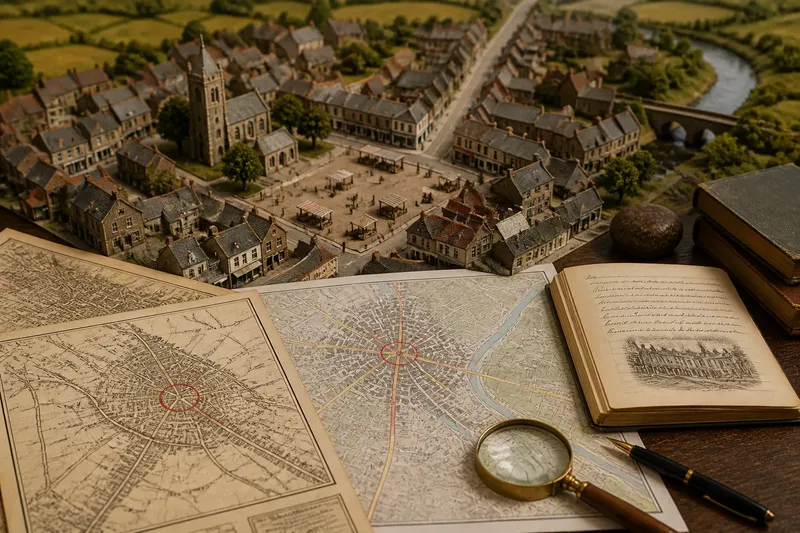
A town plan is like a well-used table: its surface may have been replaced, while marks around it hint at where people gathered. The comparison has limits. Streets change through rebuilding, property decisions and new transport needs, so read the pattern rather than treating it as a frozen scene.
How did exchange connect routes and settlement?
A recurring market gave people a reason to travel to one place. Buyers, sellers and carriers could meet there, and the gathering might also support services or arrangements for work. The town acted as a node: a point where routes and everyday connections came together.
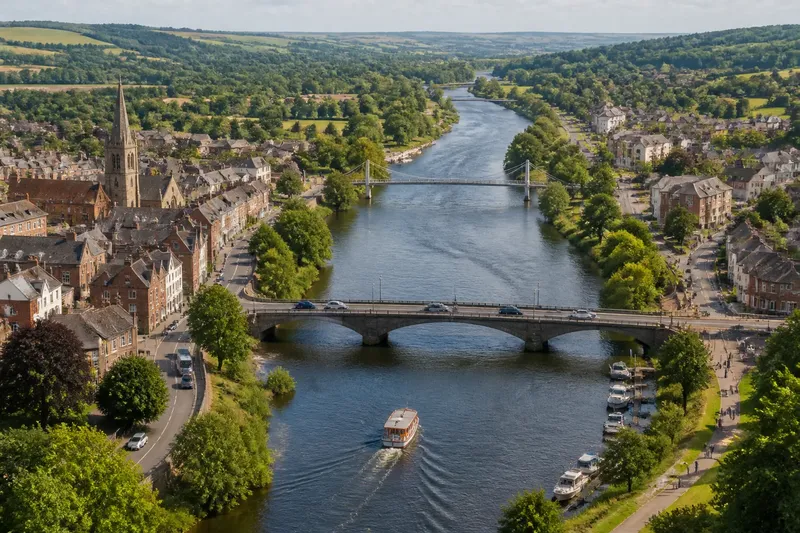
Its position mattered. A place near a crossing, bridge, pass or meeting of valleys might be accessible from several directions, though the surrounding terrain and competing centres also shaped its reach. Nearby villages could supply customers and goods, while the town offered workshops, inns and other services.
Some people might choose to settle near a regular meeting place. A stallholder could need storage, a carrier a yard, and a craft worker a stream of passing customers. Over time, homes and services might gather around the centre and its approaches; this was a possible pattern, not an inevitable result of every market.
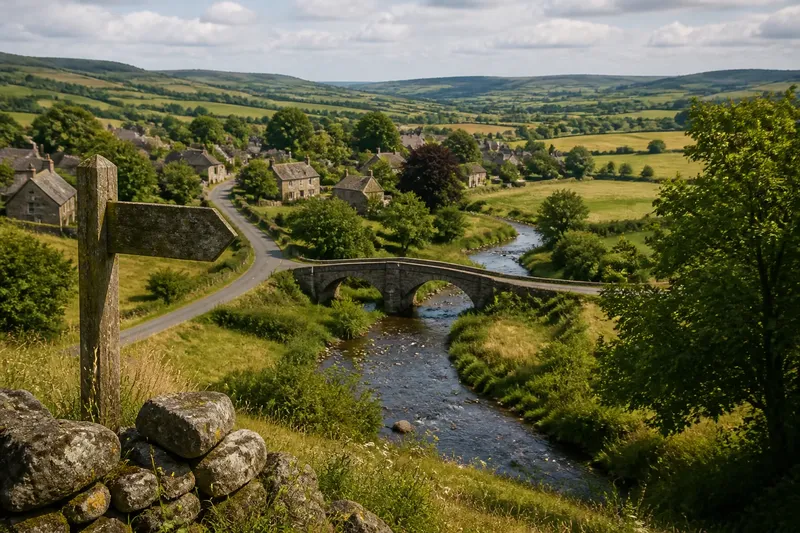
Imagine a small settlement beside a river crossing, with an open trading space and a road from two upland villages. If trading became a regular gathering, a smith, innkeeper and grain seller might choose nearby plots. The observable change would be a concentration of activity around the crossing and its approaches, not necessarily a planned square. This invented situation shows how access and repeated use could shape settlement.
How can you check the clues without overreading them?
Use each observation to decide what to investigate next. An old map, a current map and local records can help distinguish a possible market site from a later change in the town’s layout.
- Observe a market charter or local reference. If it identifies a trading right but not a site, check local histories or maps for a location; if it names a place, compare that location with other evidence rather than treating the reference as proof of the town’s full layout.
- Observe a broad or widened street. If older maps or related buildings support a market connection, treat it as a plausible clue; if they do not, consider later traffic or rebuilding and avoid calling it a market street on width alone.
- Observe that today’s busiest centre differs from the historic core. If an older map shows a different route focus, investigate a possible shift in movement; if the evidence is unclear, describe the change as uncertain rather than assigning it to a particular cause.
- Observe a small built-up area or a limited range of services. If nearby villages appear connected to the town, consider its role as a local service centre; if those links are not evident, do not infer its historic reach from its present size alone.
- Observe a former market space beside a newer trading site. If records or map labels connect them, investigate a relocation; if they do not, treat the two places as separate clues rather than assuming the market moved.
- Observe a road that converges on the suspected centre. If older maps show the route predates later transport changes, consider it part of the historic approach; if it appears only on later maps, investigate newer development instead.
Say you are examining an invented town with a broad street, a church beside an open space and a modern road leading to a newer shopping area. An older map also marks a market on the open space, while a local record refers to trading there. You would mark the open space as the documented market site, compare the older road pattern with the modern road, and describe the shopping area as a later centre only if the map evidence supports that distinction. The resulting account separates what the records indicate from what remains uncertain.
For a first pass, place an older map beside a current one and mark the suspected meeting place, routes into town and later transport corridors. Then check whether local records or building descriptions support the interpretation. If a conclusion depends on a charter, property boundary or local designation, consult the relevant record or a knowledgeable local historian rather than relying on a map symbol alone.
How do you separate market history from the town plan?
Ask two questions separately: where did exchange happen, and what made people settle nearby? The first concerns the market’s site and arrangements; the second concerns the longer pattern of streets, homes and services. Keeping them distinct helps prevent a modern layout from being mistaken for a direct survival of an earlier trading place.
Trace movement as well as looking for a square. Note where roads converge, where they skirt slopes or wet ground, and whether a crossing channels movement towards the centre. If a road now dominates, compare it with older maps before treating it as part of the historic network.
Look for continuity and change together. An inn, workshop area or central church may point to a former meeting place, while a new road or shopping area may have created another centre. A settlement can preserve traces of an older exchange network without preserving its original arrangement.
What questions do people ask about market town history?
Does a town need an active market to have market town history?
No. The phrase can describe a settlement shaped by an earlier market role, even if trading has stopped or moved. Historical identity and present activity are separate questions.
Can a market town lack an obvious square?
Yes. Trading may have taken place along a street, beside another public space or on a site later redeveloped. Routes and associated buildings can provide clues even when no square survives.
Why might a market town remain small?
A market might serve a local area without leading to extensive later development. Terrain, nearby centres and changes in regional routes could also affect the town’s connections, so its present size alone cannot establish its past role.
How can you tell whether a market moved?
Compare older and current maps, then look for references to a market hall, former trading street or replacement site. Treat relocation as a possibility unless records or map evidence connect the places.
What can the present layout tell you?
Market town history is one layer of a settlement, not a complete explanation for every street. Exchange may have helped a place gather routes, services and residents, while later transport and development redirected activity. A town’s continued central role may be connected to its market past without preserving the old arrangement.
To read the clues, mark the likely historic meeting place and follow the approaches outward. Ask which routes brought people there, what services gathered nearby and what later changes may have shifted activity. Keep documented details distinct from reasonable interpretations: that distinction makes market town history useful without turning a suggestive street plan into a claim of certainty.